Reflecting on 2025: Camgenium’s impact, learnings and innovations in MedTech
2025 has been a year of significant progress for Camgenium. Across our projects, collaborations and internal development, we continued to focus on optimising technologies to improve patient safety, streamline clinical workflows and increase access to high-quality care. From post-cardiac surgery monitoring to prostate cancer recovery and advances in medical AI, our work reflects our commitment to developing solutions that make a real difference for clinicians and patients.
As we look back on 2025, we are pleased to share key highlights, case studies and insights from our team that have guided our approach.
2025 in Review: Delivering Real-World Impact
Camgenium’s work this year spanned diverse clinical areas, but each project shared the same goal: enabling safer, more efficient and more equitable healthcare. The case studies below show how our tools are supporting patients, reducing clinical burden and strengthening care pathways.
Enhancing Post-Cardiac Surgery Outcomes
In partnership with VentriPace Medical, the formally known Cardiac Tech, we developed the prototype pacing device Pace-Protect, an innovative medical device designed to enhance patient safety following open-heart surgery. The system continuously monitors temporary pacemakers and alerts clinicians promptly to any issues, helping to prevent complications and improve outcomes.
Pace-Protect ensures reliable, secure transmission of real-time patient data throughout the hospital. This approach addresses critical challenges associated with temporary pacing, offering clinicians greater confidence and patients improved care during recovery.
Together, Camgenium and VentriPace Medical are striving to bring this important technology into clinical use, supporting safer and more effective cardiac care.
Improving Recovery Pathways for Prostate Cancer Patients
Prostate cancer is the most commonly diagnosed cancer in men in the UK, and many patients face complex informational and care needs around surgery.
In partnership with Professor Petre Cristian Ilie, Consultant Urological and Robotic Surgeon at NNUH NHS Foundation Trust, we developed HealthiumPro, a unified cloud-based pathway supporting patients before and after surgery. The system brings together remote consent, pre-surgery education, exercise guidance, vital sign monitoring and appointment visibility. It also replaces paper stent tracking with a centralised digital stent register, significantly decreasing patient risk outcomes after surgery.
HealthiumPro enhances continuity of care, helps clinicians identify complications earlier and provides patients with clearer information and greater confidence throughout their recovery.

Insights From the Team Shaping Our Approach
Throughout 2025, Camgenium’s team applied advanced thinking around patient safety, AI in clinical environments and the standards required to deliver reliable medical technology. Grounded in clinical experience, regulatory expertise and technical depth, these insights shape the principles behind our work.
Redefining Risk Management With AI
Dr Mike Roberts, who joined Camgenium this year as Medical Advisor, brings 15 years of hospital risk-management experience. He highlights that preventable harm, diagnostic errors, medication mistakes and human factors like fatigue remain major challenges. AI can help mitigate these risks by analysing large datasets, providing earlier, objective insights and complementing clinical judgement.
In 2025 Camgenium enhanced its Medical AI analytics platform. These enhanced AI-powered analytics tools are currently in use in multiple NHS Trusts across the UK. The tools successfully help hospitals manage safety both retrospectively and proactively by providing actionable insights. They assess performance against expected outcomes based on individual patient risk profiles and identify patients at higher risk from treatment delays to enable better prioritisation.
Whilst some clinicians have concerns about AI in general and the risk of over-reliance, Dr Roberts emphasises that when used thoughtfully, AI highlights areas that may need attention and supports proactive intervention. AI is already transforming diagnostics, medication management, predictive analytics and remote support. Dr Roberts explains, 'The real promise of AI lies in making healthcare proactive; helping clinicians prevent harm, extend healthy life years and restore trust in a safer, smarter system.'
Building Safe and Effective Medical AI
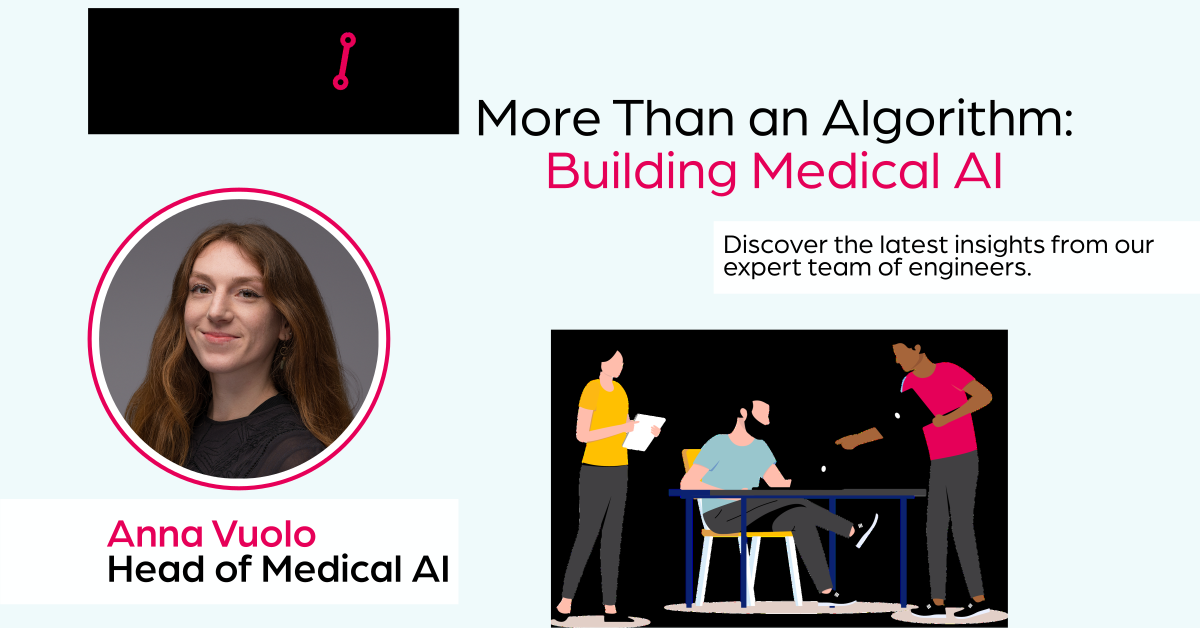
Anna Vuolo, Camgenium’s Head of Medical AI, emphasises that successful AI begins with clearly defined clinical problems. Safe, reliable models require representative, high-quality datasets, rigorous data cleansing and ongoing monitoring to ensure accuracy across populations and specialties.
Camgenium’s AI tools, including RiskTriage for hospital-acquired pneumonia and acute kidney injury, help clinicians focus on high-risk patients without adding administrative burden. Explainability ensures clinicians and developers understand model outputs, while alignment with regulatory frameworks such as ISO 13485 (medical devices) and ISO 14971 (risk management) guarantees safety and compliance.

AI models that affect patient care must be interpretable by clinicians overseeing development so they can understand the rationale behind predictions, trust the system’s output and, if necessary, challenge it.
Anna Vuolo
Head of Medical AI, Camgenium
The Importance of Regulating Medical AI
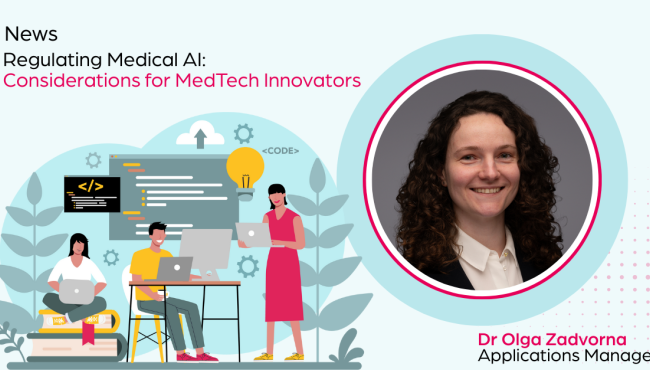
Application Manager Dr Olga Zadvorna frames regulation as essential for trustworthy innovation. Standards such as ISO 13485, ISO 14971 and IEC 62304 provide structured guidance for quality management and risk mitigation throughout the product lifecycle. Olga also highlights the importance of unbiased data, clinical oversight and continuous monitoring to ensure AI systems remain fair, reliable and safe in real-world settings.

Regulation, often perceived as a barrier to innovation, plays a critical enabling role in medical AI by ensuring patient trust, providing assurance to clinicians and ensuring long-term market viability.
Olga Zadvorna
Applications Manager, Camgenium
Why Standards Matter in Medical Device Development
CEO Dr Philip Gaffney OBE reinforces that engineering excellence is the foundation of safe medical technology. Whilst regulatory audits verify documentation, true safety comes from disciplined engineering practices, robust quality controls and adherence to standards as the standards were created to prevent device failures that happened historically. Many organisations still lack the processes or expertise needed for safe development and instead prioritise rapid prototypes over reliable engineering.
This is the reason Camgenium has developed its new Foundation 2a platform, a pre-validated regulatory compliant software infrastructure for building class IIa / IIb medical devices.
Conclusion
The insights gained this year, paired with the real-world impact seen across clinical settings, position us strongly for the year ahead. In 2026, Camgenium will continue to expand our AI-powered analytics tools, further develop our regulatory compliant medical firmware and software platform and support MedTech innovators in developing new medical devices. We will partner with innovators and clinicians across the NHS and beyond to develop solutions that enhance safety, efficiency and outcomes.
2025 has been a year of collaboration and meaningful progress. As Camgenium looks ahead to 2026, we remain committed to advancing healthcare technology that is safer, smarter and more accessible for all.